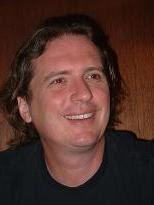
I have seen this list in various forms/incarnations. This one was shared by Fable Goodman, a.k.a Lawrie Shaw, wonderful hypnotherapist from the UK.
One: You will receive a body.
You may like it or hate it, but it will be yours for as long as you live.
How you take care of it or fail to take care of it can make an enormous difference to the quality of your life.
Two: You will be presented with lessons.
You are enrolled in a full time informal school called life.
Each person, animal, object or occurrence can be your teacher.
Each day, you will be presented with opportunities to learn what you need to know.
The lessons presented are often completely different from those you want, or think you need.
You may like the lessons or think them irrelevant or stupid.
Three: There are no mistakes, only lessons.
Growth is a process of trial, error and experimentation.
You can learn as much from failure as you can from success, maybe more!
(perhaps the only real mistake is not learning the lesson.)
Four: A lesson is repeated until it is learned.
A lesson will be presented to you in various forms until you have learned it.
When you have learned it,
(as evidenced by a change in your attitude and behaviour)
then you can go on to the next lesson.
Five: If you don’t learn easy lessons, they get harder.
External problems are a precise reflection of your internal state.
When you clear inner obstructions, your outside world changes.
Pain is one way the universe gets your attention.
Six: Learning lessons does not end.
There is no stage in life that does not contain some lessons.
If you are alive, there are still lessons to be learned!
Seven: “There” is no better than “here”.
When your “there” has become a “here”,
you will simply discover another “there”
that will again look better than your here”.
Don’t be fooled into believing that the unattainable is better than what you have.
Eight: You always get what you want.
Your subconscious rightly determines what energies, experiences and people you attract.
Therefore the only foolproof way to know what you want, is to look at what you have.
Nine: You can get there from here!
A way exists... You personally can find it!
Your life is up to you
You have all the tools and resources you need.
What you create with those tools and resources, is up to you.
Unless you change your direction, you may end up where you are headed.
Through desire, goal setting and unflagging effort, you can have anything you want.
Persistence is the key to success.
There are no victims; only students.
Take charge of your life (or somebody else will).
Ten: Others are merely mirrors of you.
You cannot love or hate something about another person,
unless it reflects something you love or hate about yourself.
When tempted to criticise others, ask yourself why you feel so strongly.
Eleven: Your answers lie within you.
The solutions to all of life’s problems lie within your grasp.
You know more than you have heard or read or been told.
Much more than you know you know!
All you need to do is ask, look, listen and trust.
Twelve: You are most likely to forget all this.
Unless you consistently stay focused on the goals you have set for yourself,
everything you have just read won’t mean a thing.
Thirteen: You can choose to remind yourself.
You can choose to remind yourself as often as necessary,
to keep yourself on your chosen course.
Wednesday, June 2, 2010

Wednesday, May 26, 2010
Goal Setting-Four Important Steps
Its been said that "a goal is a dream with a deadline." Yet achieving them also seems to defy a lot our best intentions and wishful thinking.
A gem of a book I recently picked up is 59 Seconds, Think a Little, Change a Lot by Richard Wiseman, a psychologist from the U.K..
My longtime readers may recall that Wiseman is one of my favorite authors, in fact the class I present occasionally on increasing the amount of luck in your life is in large part based on his groundbreaking book the Luck Factor.
In 59 Seconds Wiseman has sifted through tons of research as to what works and what doesn’t as far as self-help goes.
A sacred cow in self-help is that of visualizing oneself as already being successful, yet is this truly helpful? In one study a group of college students who had an important exam coming up were divided into two groups.
One group was told to spend several minutes a day visualizing themselves getting a fantastic grade on the exam. The second group was asked not to do anything along these lines. In both groups the students were asked to record how much time they studied each day.
Counter intuitively the visualization group, while reporting they felt better about themselves, studied less and received lower grades than their counterparts.
It is theorized that those who imagined themselves as already successful were less prepared for any adversity as it arose and due to the escapism the fantasy provided, felt less incentive to put in the necessary effort.
This is not to say that focusing on the future benefits of a desired change isn’t helpful, however there are three other steps you need to take to raise your chances of success. Curious as to what they are?
The four steps Wiseman lists are:
Having a concrete, written plan: first write down your overall goal such as losing a specific amount of weight. Then list any action steps or sub-goals required to make your goal a reality. For example with weight loss it might be selecting a diet and/or exercise plan. To be even more effective, get into specifics such as dates and times of starting and completion, who, what, when, where, etc. Keep a written or computer journal that tracks your progress. Think about this as creating a text book for your success.
Tell friends and family who are supportive about what you intend to do: this creates an accountability factor. If you keep your goal to yourself, its kind of easy to let yourself off the hook when the going gets tough. The desire to appear consistent in your social circle is a very strong one. One caveat, don’t include pessimistic or overly negative people who may have a vested interest in your failure.
Focus on the benefits: in your journal write down how you expect your life to be better once the change is made. Once again, get into specifics.
Plan rewards for completing tasks: say one of your goals is to workout 3 times a week for the next month. Upon completion of that goal give yourself a small reward. Now it shouldn’t conflict with your overall goal, so if say you want to lose weight you shouldn’t reward a week of healthy with a quart of ice cream! Nonetheless you want to create positive associations with completing your tasks.
One additional step I would include would be setting up some form of ongoing encouragement in the form of self-hypnosis, affirmations or even posting positive statements on post-it notes where they will act as an almost subliminal reminder. A certified hypnosis professional can help you in this regard.
A gem of a book I recently picked up is 59 Seconds, Think a Little, Change a Lot by Richard Wiseman, a psychologist from the U.K..
My longtime readers may recall that Wiseman is one of my favorite authors, in fact the class I present occasionally on increasing the amount of luck in your life is in large part based on his groundbreaking book the Luck Factor.
In 59 Seconds Wiseman has sifted through tons of research as to what works and what doesn’t as far as self-help goes.
A sacred cow in self-help is that of visualizing oneself as already being successful, yet is this truly helpful? In one study a group of college students who had an important exam coming up were divided into two groups.
One group was told to spend several minutes a day visualizing themselves getting a fantastic grade on the exam. The second group was asked not to do anything along these lines. In both groups the students were asked to record how much time they studied each day.
Counter intuitively the visualization group, while reporting they felt better about themselves, studied less and received lower grades than their counterparts.
It is theorized that those who imagined themselves as already successful were less prepared for any adversity as it arose and due to the escapism the fantasy provided, felt less incentive to put in the necessary effort.
This is not to say that focusing on the future benefits of a desired change isn’t helpful, however there are three other steps you need to take to raise your chances of success. Curious as to what they are?
The four steps Wiseman lists are:
Having a concrete, written plan: first write down your overall goal such as losing a specific amount of weight. Then list any action steps or sub-goals required to make your goal a reality. For example with weight loss it might be selecting a diet and/or exercise plan. To be even more effective, get into specifics such as dates and times of starting and completion, who, what, when, where, etc. Keep a written or computer journal that tracks your progress. Think about this as creating a text book for your success.
Tell friends and family who are supportive about what you intend to do: this creates an accountability factor. If you keep your goal to yourself, its kind of easy to let yourself off the hook when the going gets tough. The desire to appear consistent in your social circle is a very strong one. One caveat, don’t include pessimistic or overly negative people who may have a vested interest in your failure.
Focus on the benefits: in your journal write down how you expect your life to be better once the change is made. Once again, get into specifics.
Plan rewards for completing tasks: say one of your goals is to workout 3 times a week for the next month. Upon completion of that goal give yourself a small reward. Now it shouldn’t conflict with your overall goal, so if say you want to lose weight you shouldn’t reward a week of healthy with a quart of ice cream! Nonetheless you want to create positive associations with completing your tasks.
One additional step I would include would be setting up some form of ongoing encouragement in the form of self-hypnosis, affirmations or even posting positive statements on post-it notes where they will act as an almost subliminal reminder. A certified hypnosis professional can help you in this regard.
Wednesday, April 7, 2010
Living Low Carb Review
As a certified hypnosis professional I have seen many individuals in both the group and individual format to help them become more motivated towards healthy weight loss.
Although hypnotists are effective at helping people with the motivation and stress reduction parts of the weight loss equation, often we don't have the additional training and qualifications to recommend a specific dietary plan.
A resource worth considering is Living Low Carb by Jonny Bowden, a former editor of Men's Health Magazine.
Many people, myself included, find compliance with a plan easier when we understand the rationale behind. In these pages Bowden does an admirable job of explaining how the glut of refined carbohydrates in the modern diet is what is driving our current obesity epidemic and all its related health worries.
Bowden reviews numerous dietary plans, which allows the reader to weigh the pros and cons of following each one.
All in all, I gladly recommend Living Low Carb to both people seeking to achieve a healthy bodyweight and practitioners of natural healing arts.
Although hypnotists are effective at helping people with the motivation and stress reduction parts of the weight loss equation, often we don't have the additional training and qualifications to recommend a specific dietary plan.
A resource worth considering is Living Low Carb by Jonny Bowden, a former editor of Men's Health Magazine.
Many people, myself included, find compliance with a plan easier when we understand the rationale behind. In these pages Bowden does an admirable job of explaining how the glut of refined carbohydrates in the modern diet is what is driving our current obesity epidemic and all its related health worries.
Bowden reviews numerous dietary plans, which allows the reader to weigh the pros and cons of following each one.
All in all, I gladly recommend Living Low Carb to both people seeking to achieve a healthy bodyweight and practitioners of natural healing arts.
Subscribe to:
Comments (Atom)